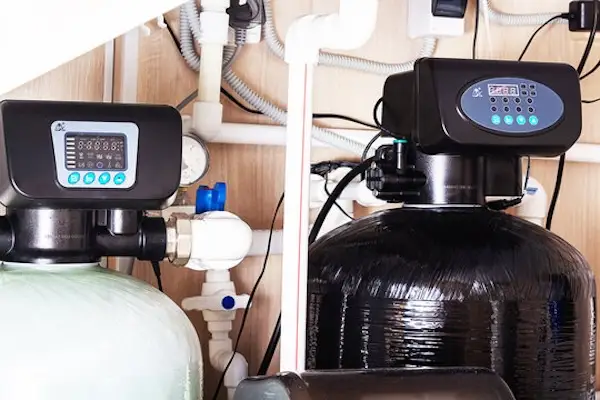
Recognizing water softener problems early prevents hard water damage to your plumbing and appliances. Common warning signs indicate your system needs professional service.
Hard Water Symptoms Returning:
The most obvious sign is hard water symptoms reappearing. You'll notice soap doesn't lather well in the shower, dishes come out of the dishwasher with white spots or cloudy film, shower doors develop buildup faster than normal, and you see scale forming on faucets and fixtures. In Blue Springs, MO and Overland Park, KS, our notably hard water makes these symptoms very apparent when softeners aren't working properly.
Salt-Related Problems:
Monitor your salt consumption patterns. If the salt level in your brine tank doesn't decrease over several weeks, the system isn't regenerating. Conversely, if salt disappears much faster than normal, the system may be regenerating too frequently due to control problems. Salt bridges (hard crust in the tank) or mushing (sludge at the bottom) prevent proper regeneration and require service.
Unusual Sounds or Water Flow:
During regeneration (usually at night), your softener should make predictable sounds as water flows and valves switch. Constant running water to the drain, grinding or loud motor noises, or complete silence when regeneration should occur all indicate problems. You may hear water continuously running down the drain, suggesting a stuck valve that's wasting significant water.
Water Quality Changes:
If softened water tastes excessively salty, the injector valve may be stuck open or the drain line clogged, allowing brine into your water supply. Foul odors in softened water suggest bacterial growth in the resin bed or stagnant water in the brine tank. Cloudy water or visible particles indicate resin beads escaping the tank.
Low Water Pressure:
Reduced water pressure throughout your home when the softener is in service suggests internal blockages. Resin beads can escape and clog screens, sediment can accumulate in the control valve, or the system may be stuck in regeneration mode. If pressure returns to normal when you bypass the softener, the unit needs service.
Error Codes or Lights:
Modern electronic softeners display error codes or warning lights when problems occur. These codes provide specific diagnostic information about what's wrong. Even without codes, control displays that are blank, flickering, or showing unusual readings indicate electrical or control board problems.
Age-Related Issues:
If your softener is 10-15 years old, declining performance is expected. Components wear out, resin beads lose effectiveness, and seals deteriorate. Even without obvious symptoms, older systems benefit from professional inspection to catch problems before complete failure.
What To Do:
When you notice these symptoms, contact Dragonfly Mechanical for professional diagnosis. Early service prevents more extensive damage and ensures continuous protection against hard water. Call (816) 377-1400 in Missouri or (913) 980-0920 in Kansas to schedule service.
A salt bridge is one of the most common water softener problems, and understanding what causes them helps prevent recurrence.
What Is a Salt Bridge?
A salt bridge is a hard crust that forms in the brine tank, typically a few inches below the top of the salt. The salt bonds together creating a solid dome with a hollow space underneath. Water that should dissolve the salt to create brine collects below the bridge, unable to dissolve salt above it. Without brine solution, the softener cannot regenerate properly, and hard water results even though the system appears to be working normally.
Why Salt Bridges Form:
High Humidity: Salt is hygroscopic (attracts moisture from air). In humid conditions, especially in basements during summer in Blue Springs and Overland Park, salt absorbs moisture and partially dissolves, then re-crystallizes into solid masses. This is the most common cause in our area.
Wrong Salt Type: Rock salt or salt with high impurity levels tends to bridge more readily. Using too much of any salt type, filling the tank completely to the top, can trap moisture and promote bridging.
Temperature Fluctuations: Basements that experience temperature swings cause condensation in the brine tank, leading to partial salt dissolution and recrystallization into bridges.
Overfilling: Filling the brine tank to capacity compacts salt at the bottom and promotes bridging. Manufacturers recommend keeping salt levels at least 3-4 inches above the water level and never filling completely full.
How to Detect a Salt Bridge:
Salt bridges aren't always visible. The tank looks full of salt, but when you carefully push down with a broom handle, it breaks through a hard crust with an empty space below. If your salt level doesn't decrease over several weeks while the system appears to run normally, suspect a salt bridge. Hard water symptoms despite a "full" salt tank confirm the problem.
DIY Salt Bridge Removal:
For simple salt bridges, homeowners can attempt removal. Use a long broom handle or similar tool to carefully push down on the salt. If there's a bridge, you'll feel it break through a hard crust. Gently break up the bridge into large chunks that can be removed. Avoid using sharp or metal tools that might puncture the brine tank or damage components. Remove broken salt chunks, let remaining salt settle, and allow water to dissolve salt naturally. Don't add new salt until the old salt is largely dissolved.
When to Call Professionals:
Professional service is recommended if you can't break up the bridge safely, the bridge is extremely thick or hard, bridges keep forming despite removing them, the brine tank has other problems like mushing or excessive sediment, or you're uncomfortable working with the system. We have specialized tools and techniques to clear bridges without damaging components.
Professional Bridge Removal:
Dragonfly Mechanical's thorough approach includes safely breaking and removing the bridge, completely emptying the brine tank, cleaning the tank interior to remove accumulated sediment and residue, inspecting all components for damage or wear, identifying why the bridge formed, and adjusting float settings or making other changes to prevent recurrence. We then refill with appropriate salt and verify proper operation.
Preventing Future Salt Bridges:
Related Problem: Salt Mushing:
While salt bridges create hollow spaces, mushing creates thick sludge at the tank bottom. Salt dissolves but doesn't flow properly, accumulating as dense sludge that blocks the brine intake. This requires complete tank emptying and cleaning, which is best done professionally to avoid damaging components or creating bigger problems.
If you're experiencing salt bridge problems in your Blue Springs, MO or Overland Park, KS home, Dragonfly Mechanical provides expert service to remove bridges, identify causes, and implement solutions to prevent recurrence. Call (816) 377-1400 in Missouri or (913) 980-0920 in Kansas.
A water softener continuously running water to the drain indicates serious problems requiring immediate professional attention to prevent water waste and restore proper function.
How Systems Should Operate:
Normal softeners are quiet most of the time, using water only during scheduled regeneration cycles (typically lasting 90-120 minutes at night). You might hear water flowing during regeneration, but the system should be completely silent between regeneration cycles. Continuous water flow indicates the system is stuck in regeneration or has valve failures allowing constant flow to the drain.
Common Causes of Constant Running:
1. Stuck Regeneration Valve
The control valve directs water through different paths during regeneration. If the valve sticks in the regeneration position, water continuously flows through the resin bed to the drain. The valve piston can stick from sediment buildup, worn seals causing binding, mineral scale accumulation, or mechanical failure. This is one of the most common causes of continuous water flow.
Solution: The control valve must be disassembled, cleaned, and rebuilt with new seals, or replaced if too damaged.
2. Failed Control Head Motor
Electronic softeners use small motors to advance the valve through regeneration cycles. If the motor fails mid-cycle, the valve remains in whatever position it stopped, often leaving water flowing to drain. The motor may fail from age, power surges, or debris preventing movement.
Solution: Replace the drive motor and verify the valve can move freely through all positions.
3. Timer or Electronic Control Failure
The control system tells the valve when to start and stop regeneration. If the timer or electronic control board fails, it may send continuous regeneration signals, keeping water flowing indefinitely. Power surges, age, or component failure cause control problems.
Solution: Diagnose the control system, replace failed timer or control board, and verify proper programming.
4. Worn or Failed Valve Seals
Internal seals in the control valve prevent water from flowing except during regeneration. As seals wear from years of use, water leaks past them, creating continuous drain flow even when the valve appears to be in service position. This is gradual wear that worsens over time.
Solution: Rebuild the valve with a complete seal kit, replacing all worn components.
5. Debris in the Valve
Sediment, iron particles, or resin beads can lodge in valve ports, preventing proper closure. This allows water to continuously flow to drain even when the valve tries to close. Well water systems are particularly prone to sediment-related problems.
Solution: Disassemble and thoroughly clean the valve, remove all debris, and consider adding pre-filtration to prevent recurrence.
6. Broken or Stuck Float Switch
Some systems use float switches to control brine tank water levels. If a float sticks or the switch fails, it may trigger continuous water flow trying to fill the brine tank that's already full, with overflow going to the drain.
Solution: Replace the failed float switch and verify proper water level control.
Why Immediate Service Is Critical:
Significant Water Waste: A softener running continuously can waste hundreds of gallons of water per day. At typical flow rates, you could waste 300-500 gallons daily, significantly increasing your water bill. In municipal water areas like Blue Springs and Overland Park, this also increases sewer charges based on water usage.
No Water Softening: When stuck in regeneration or drain mode, your softener isn't softening water. All household water is hard, causing immediate scale buildup, soap inefficiency, and spotting problems. The longer this continues, the more hard water damage accumulates in pipes and appliances.
Potential Component Damage: Continuous operation can overheat motors, wear valve components rapidly, and cause premature failure of parts that should last years. What might start as a simple stuck valve can become a complete control head replacement if operation continues too long.
Risk of Flooding: If the drain line can't handle continuous flow or becomes clogged, water may back up and overflow the brine tank or softener, causing basement flooding and water damage.
Immediate Actions:
If you discover your softener running continuously, put the system in bypass mode immediately by turning the bypass valve to the bypass position. This stops water flow through the softener, preventing waste and damage. Then contact us immediately for emergency service. Don't attempt to manually advance the control valve or disassemble components, as this can worsen problems or void warranties.
Professional Diagnosis and Repair:
Dragonfly Mechanical technicians have the expertise and tools to quickly diagnose why your softener runs continuously. We inspect the control valve position and movement, test electrical components and controls, check for obstructions in valve ports, measure water flow and pressure, and identify the specific failure causing continuous operation. Once diagnosed, we complete repairs using appropriate replacement parts and verify proper operation before returning the system to service.
Don't let continuous water flow waste money and leave your home unprotected from hard water. Call Dragonfly Mechanical immediately at (816) 377-1400 in Missouri or (913) 980-0920 in Kansas for fast, expert repair service.
Regular professional maintenance is essential for optimal water softener performance, longevity, and prevention of major repairs. Understanding proper maintenance schedules helps you protect your investment and ensure continuous soft water.
Recommended Service Schedule:
Annual Professional Maintenance: We recommend professional service once per year for most residential water softeners. Annual timing allows technicians to catch problems before they cause failures while avoiding unnecessary service visits. Schedule maintenance in spring or early summer when you're likely to be home and have access to your basement.
More Frequent Service Needed For:
What Annual Maintenance Includes:
Brine Tank Service: The technician empties and thoroughly cleans the brine tank, removing accumulated sediment, salt residue, and any organic growth. We inspect the tank for cracks or damage, clean the brine well and float assembly, verify proper water level control, and remove any salt bridges or mushing. A clean brine tank ensures efficient brine production for proper regeneration.
Resin Bed Inspection and Cleaning: We evaluate resin bed condition through water testing and visual inspection if accessible. For systems needing it, we perform resin bed cleaning using specialized cleaners that remove iron, sediment, and organic fouling that reduce capacity. We assess whether the resin bed is nearing the end of its life and will need replacement soon.
Control Valve Inspection: The control valve is the most complex component. We verify proper operation through all regeneration cycle positions, check for leaks from seals or o-rings, inspect the valve motor and drive mechanism on electronic units, clean valve ports and injectors, lubricate moving parts with appropriate lubricants, and test electrical connections and controls.
Regeneration Cycle Verification: We observe a complete regeneration cycle or test individual cycle stages to ensure the system properly backwashes to remove trapped sediment, draws brine effectively from the brine tank, rinses the resin bed thoroughly, and returns to service mode properly. Timing of each cycle stage should match specifications.
Water Quality Testing: We measure your raw water hardness coming into the softener and test softened water hardness to verify the system is producing properly softened water. If softened water tests over 1 grain per gallon hardness, the system isn't working correctly. We also check for iron, pH, and other factors that affect softener performance.
Settings Verification and Adjustment: We verify the regeneration frequency is appropriate for your actual water hardness and usage patterns. Many softeners are set incorrectly, either regenerating too often (wasting salt and water) or not often enough (allowing hard water breakthrough). We adjust capacity settings, regeneration frequency, and cycle times for optimal performance and efficiency.
Drain Line and Air Gap Inspection: We ensure the drain line flows freely without clogs, verify proper air gap to prevent backflow contamination, and check that the line is properly secured and routed. Clogged drain lines cause regeneration failures and potential overflow.
Complete System Report: After service, we provide a detailed report of your system's condition, any concerns identified, recommended repairs or adjustments, and estimated remaining system life. This documentation helps you plan for future needs and track your system's service history.
Benefits of Regular Professional Maintenance:
Prevents Major Repairs: Annual maintenance catches small problems before they become expensive failures. A worn seal caught during maintenance costs a fraction of emergency control valve replacement when the seal fails completely. Cleaning prevents sediment accumulation that causes valve seizure.
Extends System Life: Properly maintained softeners routinely last 15-20 years. Neglected systems often fail at 10-12 years. The cost of annual maintenance over those extra years is far less than early system replacement.
Maintains Efficiency: Dirty resin beds and improperly adjusted systems use more salt and water than necessary. Maintenance restores efficiency, reducing operating costs. Clean, well-adjusted systems often reduce salt consumption by 20-30% compared to neglected units.
Ensures Consistent Water Quality: Maintenance keeps your softener producing consistently soft water, protecting your plumbing, appliances, and fixtures from hard water damage continuously.
Preserves Warranty: Many manufacturers require annual professional maintenance for warranty coverage. Neglecting service can void warranties, leaving you responsible for full repair costs.
Between Professional Service - Homeowner Tasks:
While professional annual service is essential, homeowners should perform monthly checks:
Cost vs. Value of Maintenance:
Professional maintenance represents a small fraction of emergency repair costs or early replacement costs. Consider that premature softener replacement costs thousands of dollars, major repairs (control valve replacement) typically cost several hundred dollars, and hard water damage to a water heater can require replacement at significant cost. Annual maintenance costs far less and prevents these expensive problems.
Schedule your annual water softener maintenance with Dragonfly Mechanical in Blue Springs, MO or Overland Park, KS. Our thorough service keeps your system operating efficiently for years, prevents unexpected failures, and ensures continuous protection against hard water damage. Call (816) 377-1400 in Missouri or (913) 980-0920 in Kansas to schedule service.
The resin bed is the heart of your water softener, performing the actual ion exchange that softens water. Understanding when replacement is needed and why helps you maintain effective water softening.
What Is the Resin Bed?
The resin bed consists of millions of tiny plastic beads (typically 8-10 cubic feet in residential systems) with special surface properties that attract and hold calcium and magnesium ions. These beads are housed in the main resin tank and create a large surface area for ion exchange. As water flows through the bed, hardness minerals stick to the resin beads while sodium is released, effectively softening the water.
Expected Resin Life:
Quality resin beds typically last 10-15 years under normal conditions. However, lifespan varies significantly based on water quality, usage volume, maintenance quality, and whether the water contains contaminants that damage resin. Some resin beds in ideal conditions can last 20 years, while others in harsh water conditions may need replacement after 7-8 years.
Signs Resin Replacement Is Needed:
1. Hard Water Despite Proper Regeneration
The most obvious sign is hard water symptoms returning even though the softener appears to be regenerating properly. You confirm the system is using salt and going through regeneration cycles, but water testing still shows significant hardness (over 1 grain per gallon). This indicates the resin has lost its ion exchange capacity and can no longer effectively remove hardness minerals. No amount of regeneration will restore capacity to exhausted resin.
2. Resin Beads in Household Water
If you see small, brownish, spherical beads in your water, toilet tanks, faucet aerators, or appliance filters, the internal screen or distributor in your softener has failed, allowing resin beads to escape. Once the screen fails, the resin bed is contaminated with debris and must be replaced. The screen or distributor must also be replaced to prevent recurrence.
3. Foul Odors or Tastes
Musty, sulfurous, or generally bad odors in softened water often indicate bacterial growth in the resin bed or organic fouling that can't be removed by normal regeneration. While resin cleaning might temporarily help, persistent odors usually require complete resin replacement. This is more common in systems that sit unused for extended periods or in homes with bacterial contamination in the water source.
4. Excessive Salt Consumption Without Results
If your softener uses salt normally but produces hard water, the resin isn't responding to regeneration. Testing shows salt consumption continuing and brine being properly drawn, but water hardness remains high. This indicates the resin beads are chemically exhausted and can no longer be recharged effectively.
5. Visible Resin Damage
If you can see the resin (during service or through inspection ports), degraded resin appears broken, discolored, or clumped together rather than uniform beads flowing freely. Resin exposed to chlorine for years often turns dark brown or black. Physical breakdown creates fine particles that clog the system and reduce effectiveness.
6. Iron Fouling
Homes with iron in their water (common in well systems in rural areas around Blue Springs and Overland Park) experience iron fouling where iron particles coat resin beads, forming an impervious layer that prevents ion exchange. Severely iron-fouled resin turns orange or red. While specialized resin cleaners can remove light fouling, heavy iron accumulation requires resin replacement.
7. System Age and Preventive Replacement
If your softener is 12-15 years old and has never had resin replacement, it's approaching the end of typical resin life. Proactive replacement before complete failure prevents the sudden return of hard water problems. This is especially wise if you're already making other repairs like control valve replacement.
Factors That Shorten Resin Life:
Chlorine Exposure: Municipal water contains chlorine for disinfection, which gradually breaks down resin structure. Systems in Blue Springs, MO and Overland Park, KS receiving city water experience this constant exposure. Carbon pre-filtration can protect resin from chlorine damage.
Iron in Water: Even small amounts of iron (as low as 0.3 ppm) gradually foul resin beads. Well water often contains iron. Without proper pre-treatment, iron accumulation significantly shortens resin life.
Poor Maintenance: Neglected softeners that don't receive regular cleaning and service develop sediment accumulation, bacterial growth, and organic fouling that damage resin prematurely.
Hard Water Quality: Extremely hard water (over 15 grains per gallon) requires more frequent regeneration, causing more resin stress over time.
Chemical Contaminants: Water with tannins (organic acids causing yellow/brown color), oils, or other organic contaminants foul resin quickly.
The Resin Replacement Process:
Professional Service Required: Resin replacement is not a DIY job. It requires proper tools, knowledge of system design, and quality replacement resin. Professional replacement ensures proper results.
Our Process:
Benefits of Resin Replacement:
New resin restores full softening capacity, often improving water quality beyond what you remember from the aging system. Salt efficiency improves significantly as fresh resin regenerates more effectively, typically reducing salt consumption by 20-40% compared to exhausted resin. Water flow improves if old resin had degraded into fine particles causing restrictions. The system operates as designed, protecting your plumbing and appliances from hard water damage.
Cost Considerations:
Resin replacement costs a fraction of new softener installation. If your tank, control valve, and other components are in good condition, resin replacement extends system life by 10-15 years at modest cost. However, if your system is very old (15+ years) and has multiple problems, new system installation may be more cost-effective long-term.
If you're experiencing hard water problems despite regeneration, or your softener is over 10 years old and showing declining performance, contact Dragonfly Mechanical for resin evaluation. We test your water quality, inspect your system, and provide honest recommendations about whether resin replacement or system replacement makes the most sense for your situation. Call (816) 377-1400 in Missouri or (913) 980-0920 in Kansas.
Salty taste or foul odors in softened water indicate problems that require professional diagnosis and repair. Understanding these issues helps you recognize when service is needed.
Salty Water Problems:
What Causes Salty Taste:
Properly softened water should not taste salty. While the softening process exchanges hardness minerals for sodium, the amount added is minimal and shouldn't create a salty taste. When water tastes salty, brine solution is being improperly introduced into your household water supply instead of being used only during regeneration and then rinsed away.
Common Causes of Salty Water:
1. Stuck Brine Injector Valve
The injector draws brine during regeneration and should seal completely afterward. If this valve sticks open, brine continuously enters your water supply. This is one of the most common causes of salty water and requires immediate service because it wastes salt, makes water unpalatable, and can damage appliances.
Solution: Clean or replace the injector valve assembly, verify proper operation, and ensure complete closure.
2. Clogged Drain Line
During regeneration, waste water (including brine) must drain away. If the drain line clogs, waste water can't exit properly. The system may back up during rinse cycles, leaving brine residue that enters your water supply. You might notice overflow around the softener in severe cases.
Solution: Clear the drain line blockage, verify free flow, ensure proper air gap, and check drain line routing.
3. Regeneration Too Frequent
If your softener is set to regenerate more often than necessary (daily or multiple times per week when not needed), or if the control timer malfunctions causing frequent regeneration, the system may not complete proper rinse cycles between regenerations. Residual brine remains in the resin bed.
Solution: Adjust regeneration frequency to match your actual water usage and hardness, or repair/replace the faulty timer.
4. Incorrect Hardness Setting
If the softener is programmed for higher water hardness than you actually have, it uses more salt than necessary and may not rinse completely. While less common, this can contribute to salty taste, especially in combination with other issues.
Solution: Test your water hardness and program the softener with accurate settings.
5. Insufficient Rinse Cycle
The final step of regeneration rinses remaining brine from the resin bed. If the rinse cycle is too short or doesn't complete properly due to low water pressure, valve problems, or incorrect timing, brine residue remains and enters household water.
Solution: Verify proper rinse cycle duration, check water pressure, and ensure the control valve advances properly through the complete cycle.
Bad Odors in Softened Water:
What Causes Bad Odors:
Foul odors in softened water typically result from bacterial growth or organic contamination in the water softener system. The warm, moist environment inside a resin tank provides ideal conditions for certain bacteria if contamination occurs.
Common Causes of Water Odors:
1. Bacterial Growth in Resin Bed
The most common cause is bacteria establishing colonies in the resin bed, particularly if the water supply contains organic material or if the system sits unused for extended periods. Bacteria produce various compounds that create musty, earthy, or sulfurous odors. This is more common in vacation homes or properties that are vacant for weeks at a time.
Solution: Disinfect the resin bed using chlorine or professional sanitizing procedures, or replace the resin if contamination is severe.
2. Stagnant Water in Brine Tank
Water in the brine tank that sits for long periods without being used during regeneration can become stagnant, allowing bacterial growth and organic breakdown. This produces foul odors that enter your water during the next regeneration.
Solution: Empty and thoroughly clean the brine tank, disinfect with bleach solution, verify proper regeneration frequency, and ensure the tank empties and refills properly during cycles.
3. Sulfur Bacteria
If your water source contains sulfur bacteria (more common in well water), they can colonize in the softener and produce hydrogen sulfide gas, which smells like rotten eggs. Even low concentrations create strong odors. Sulfur bacteria often come from the well itself but thrive in the softener environment.
Solution: Disinfect the entire water system including the well if applicable, shock chlorinate the softener system, and consider continuous chlorination or other treatment for the water supply.
4. Organic Contamination in Water Source
Water sources with tannins (organic acids from decaying vegetation) or other organic compounds can cause odor problems. These organics accumulate on the resin bed and can foster bacterial growth or decompose to produce odors.
Solution: Clean or replace the resin bed, consider carbon pre-filtration to remove organics before the softener, or use specialized resin designed for high-organic water.
5. Anaerobic Conditions
If water flow is insufficient or the system sits unused, anaerobic (oxygen-free) conditions can develop, allowing bacteria that produce sulfur compounds to thrive. This creates the characteristic rotten egg smell.
Solution: Disinfect the system, increase water flow through regular use, and ensure proper regeneration cycles prevent stagnation.
Diagnosis and Testing:
Professional diagnosis includes testing softened water for sodium levels to confirm excess salt, checking water for specific bacteria types, inspecting brine tank condition and cleanliness, verifying proper regeneration cycle operation and timing, measuring water pressure and flow rates, and testing raw water to identify source contamination. These tests identify the specific cause so proper repairs can be made.
Health Considerations:
Salty Water: While unpalatable, occasional salty water isn't generally harmful to healthy individuals. However, people on sodium-restricted diets should avoid drinking softened water and use bypass water for drinking and cooking. The added sodium from properly functioning softeners is minimal, but malfunctioning systems adding excess salt should be repaired promptly.
Odorous Water: Most odors from water softener problems are unpleasant but not dangerous. However, bacterial contamination indicates a sanitation issue that should be addressed. While the bacteria types that typically grow in softeners aren't usually pathogenic, proper water sanitation is important. If odors are severe or sudden, have your water tested for contamination.
Prevention:
Prevent these problems through regular maintenance including annual professional service, using quality salt from fresh bags, keeping the brine tank clean, ensuring proper regeneration frequency, running water regularly if you're away (or putting the system in bypass), and addressing water quality issues at the source. Proper system operation and maintenance prevent most taste and odor problems.
If your softened water tastes salty or has unpleasant odors, don't ignore the problem. Contact Dragonfly Mechanical for professional diagnosis and repair. We'll identify the cause, make appropriate repairs, sanitize your system if needed, and restore pleasant-tasting, odor-free soft water. Call (816) 377-1400 in Missouri or (913) 980-0920 in Kansas.
While some basic water softener maintenance can be performed by homeowners, most repairs require professional expertise, specialized tools, and proper replacement parts to ensure reliable, lasting results.
DIY-Friendly Maintenance Tasks:
Homeowners can safely perform several routine maintenance tasks:
Adding Salt: The most basic task is keeping the brine tank filled with appropriate salt. Use solar salt pellets or crystals, maintain the salt level at least 3-4 inches above the water line, and avoid overfilling (leave a few inches of space at the top). Purchase fresh salt from reputable sources.
Breaking Up Salt Bridges: If you discover a salt bridge (hard crust in the brine tank), you can carefully break it up using a broom handle or similar blunt tool. Push straight down carefully to break through the bridge, then remove the broken chunks. However, if bridges recur frequently, professional service is needed to identify and fix the underlying cause.
Basic Brine Tank Cleaning: Periodically, you can empty the brine tank, remove remaining salt, and clean the interior with water and a brush. This removes accumulated sediment and residue. Let the tank dry, then refill with fresh salt. This is time-consuming but straightforward.
Checking for Visible Leaks: Regularly inspect around your softener for water leaks or dampness. While fixing leaks usually requires professional service, early detection prevents water damage.
Testing Water Hardness: Home water hardness test kits (available at hardware stores) allow you to verify your softener is working. Test raw water before the softener and softened water after. Properly softened water should test at 0-1 grains per gallon hardness.
Repairs That Require Professional Service:
Control Valve Repairs:
The control valve contains complex internal components including pistons, seals, spacers, and precisely machined ports. Disassembly requires understanding valve design, having the correct seal kits and parts for your specific model, using proper tools including manufacturer-specific wrenches and picks, and knowing the exact reassembly sequence. Even experienced DIYers often cause more problems by misaligning seals, damaging o-rings during installation, or losing small critical components. Professional technicians have model-specific expertise and the right tools to rebuild valves correctly the first time.
Resin Bed Replacement:
Replacing resin media requires completely draining the tank (hundreds of pounds of wet resin), removing old resin without damaging internal components, thoroughly cleaning the tank interior, inspecting the distributor tube and screens, and properly filling with new resin to avoid voids. Using the wrong resin type, incorrect resin volume, or improper filling techniques leads to poor performance and short resin life. This job requires proper equipment, quality replacement resin, and expertise to do correctly.
Electrical and Electronic Repairs:
Modern softeners use electronic controls, timers, drive motors, and circuit boards. Diagnosing electrical problems requires multimeters and understanding of circuits. Replacing controls requires programming settings correctly and verifying proper operation. Safety is paramount—water and electricity are a dangerous combination. Incorrect electrical repairs can create fire hazards, cause complete system failure, or void warranties.
Plumbing Modifications:
Repairs involving plumbing connections, valve replacements, or discharge line modifications require plumbing knowledge, proper tools, and adherence to local codes. Mistakes can cause leaks leading to significant water damage, improper drainage causing regeneration failures, or code violations creating problems during home sales or insurance claims.
Complex Leak Repairs:
While homeowners might attempt to tighten a loose fitting, diagnosing leak sources often requires experience. Leaks from cracked brine tanks require tank replacement, leaks from control valves need seal replacement requiring valve disassembly, and leaks from the resin tank itself often indicate major problems. Improper leak repairs typically make situations worse.
Regeneration System Problems:
When softeners don't regenerate properly, diagnosis requires understanding the regeneration sequence, testing brine draw, verifying water flow and pressure, inspecting injectors and eductor assemblies, and checking drain line function. These problems have multiple potential causes requiring systematic diagnosis and specialized knowledge.
Risks of DIY Repairs:
Incorrect Diagnosis: Water softener problems often have similar symptoms with different causes. DIYers commonly replace the wrong components, wasting money without solving problems. Professional diagnosis identifies actual causes rather than guessing.
Wrong Parts: Water softeners have thousands of variations. The control valve on your specific model requires specific seals, pistons, and components. Generic "universal" parts often don't work properly. We stock correct parts for major brands and quickly source specialized components.
Worsening Problems: Attempted DIY repairs often cause additional damage. Overtightening fittings cracks plastic components, misaligned seals cause worse leaks than the originals, and incorrectly reassembled valves may not function at all. What started as a minor repair becomes a major one.
Voiding Warranties: Many manufacturers void warranties if repairs are attempted by anyone other than authorized technicians. Your DIY attempt might save money initially but cost more if warranty coverage is lost.
Safety Hazards: Electrical components near water create shock and fire hazards if not handled properly. Water leaks from failed repairs cause basement flooding and property damage costing far more than professional service.
Time and Frustration: DIYers often spend days troubleshooting, ordering parts, attempting repairs, and dealing with failures. Professional service is completed in hours, with guaranteed results and proper testing.
When Professional Service Makes Sense:
Call Dragonfly Mechanical when you notice hard water symptoms returning, hear continuous water running, observe salt not being used or being used too quickly, detect leaks around the softener, see error codes or warning lights, experience low water pressure, or are uncertain about any maintenance or repair. We provide fast, expert diagnosis and repair using proper parts and techniques, guarantee our work, and ensure your system operates reliably for years.
Cost Considerations:
While DIY might seem cheaper, consider that incorrect repairs often require professional service anyway to fix both the original problem and damage from failed DIY attempts, wrong parts are wasted money that doesn't solve the problem, water damage from leaks costs hundreds or thousands to repair, and voided warranties leave you paying full price for future repairs. Professional service provides correct diagnosis, proper parts, expert repairs, testing and verification, and guaranteed results—often for less than multiple DIY attempts would cost.
Our Recommendation:
For basic maintenance like adding salt and breaking up salt bridges, DIY is fine with proper care. For any actual repairs—valves, controls, resin, or plumbing—professional service from Dragonfly Mechanical ensures proper diagnosis, correct repairs, and reliable results. We serve Blue Springs, MO, Overland Park, KS, and the Kansas City metro area with expert water softener service. Call (816) 377-1400 in Missouri or (913) 980-0920 in Kansas.
Water softener lifespan varies significantly based on quality, maintenance, water conditions, and usage patterns. Understanding what affects longevity helps you maximize your investment and plan for eventual replacement.
Overall System Lifespan:
Quality residential water softeners typically last 15-20 years with proper maintenance. Some well-maintained systems in ideal conditions exceed 20 years, while neglected systems in harsh water conditions may need replacement after 10-12 years. The wide range reflects how significantly maintenance and water quality impact longevity.
Component-Specific Lifespans:
Water softeners aren't monolithic units—they consist of several components with different expected lifespans:
Resin Bed: 10-15 Years
The resin bed performs the actual softening and typically requires replacement before other major components fail. Chlorine in municipal water gradually breaks down resin structure over 10-15 years. Iron in well water accelerates resin fouling. High water usage increases regeneration frequency, stressing resin more. Quality resin from reputable manufacturers lasts longer than cheap alternatives. Proper maintenance including periodic resin cleaning extends life, while neglect shortens it.
Control Valve: 10-15 Years
Control valves experience constant water flow and frequent cycling during regeneration, causing wear. Mechanical timers on older systems typically last 10-12 years before motors or timing mechanisms fail. Electronic controls last 12-15 years, though circuit boards can fail sooner from power surges. Seals and o-rings within valves wear out every 5-10 years but are replaceable. Quality name-brand valves outlast cheap knock-offs significantly.
Brine Tank: 15-20+ Years
Brine tanks (also called salt tanks) are simple polyethylene containers that rarely fail if properly maintained. They can last the entire life of the system. Cracks can develop from physical damage or extremely cold temperatures, but this is uncommon. The float assembly and brine well inside the tank are replaceable components with 10-15 year lifespans.
Resin Tank: 15-20+ Years
The fiberglass or polyethylene resin tank housing the resin bed is durable and typically lasts the system's entire life. Tank failures are rare but can occur from physical damage, manufacturing defects, or extreme conditions. Internal components like the distributor tube and screens may need replacement before the tank itself fails.
Electronic Controls: 10-15 Years
Modern systems use circuit boards, displays, and sensors that typically last 12-15 years. Circuit boards can fail sooner from power surges, moisture infiltration, or component defects. Replacing electronic controls can be expensive, sometimes approaching half the cost of a new system on older units.
Factors That Extend Lifespan:
Regular Professional Maintenance: Annual service catches small problems before they cause component failures, keeps the system clean and operating efficiently, and significantly extends overall system life. Well-maintained systems routinely reach 18-20 years or more.
Quality Installation: Proper installation with correct sizing, appropriate plumbing, and proper electrical connections prevents stress and premature failures. Poorly installed systems experience more problems and shorter life.
Using Quality Salt: Solar salt pellets or crystals contain fewer impurities than rock salt. Clean salt reduces sediment accumulation and prevents many problems that shorten system life.
Good Water Quality: Clean municipal water with moderate hardness (8-12 grains per gallon) is easiest on softeners. Pre-filtration that removes sediment and chlorine protects system components and extends life significantly.
Proper Sizing: Systems sized appropriately for household water usage don't over-work, regenerating at reasonable frequencies. Undersized systems regenerate too often, wearing out components faster.
Indoor Installation: Water softeners installed in climate-controlled basements last longer than those in unheated garages or outdoor installations subject to temperature extremes and weather exposure.
Factors That Shorten Lifespan:
Lack of Maintenance: Neglected systems develop sediment buildup, salt bridges, and component wear that could have been prevented. Systems without regular maintenance typically fail at 10-12 years rather than reaching their 15-20 year potential.
Poor Water Quality: Well water with high iron content (over 0.3 ppm) fouls resin beds and clogs valves. Sediment causes excessive wear. Very hard water (over 15 grains per gallon) requires more frequent regeneration, stressing components more. Water with high chlorine levels breaks down resin and seals faster.
Undersized Systems: When softeners are too small for household demand, they regenerate excessively (sometimes multiple times daily). This rapid cycling wears out motors, seals, and resin much faster than normal. A properly sized system should regenerate every 2-4 days on average.
Power Issues: Areas with frequent power surges or outages stress electronic controls. Homes without surge protection experience more electronic control failures. Lightning strikes on power lines can destroy circuit boards.
Low-Quality Systems: Budget softeners use inferior components including thin-walled resin tanks, cheap valves with poor seals, and low-quality resin. These systems often fail at 8-12 years even with good maintenance. Quality brands like Culligan, Kinetico, and other reputable manufacturers build systems designed for 15-20+ year lifespans.
Freezing Conditions: Softeners installed in unheated areas where freezing is possible experience stress from ice formation, causing cracks in tanks, valve damage, and plumbing failures. Frozen softeners sometimes suffer irreparable damage.
Signs It's Time for Replacement:
Sometimes repair makes sense; other times replacement is the better investment:
Consider Replacement When:
Good Candidates for Repair:
Our Honest Assessment:
At Dragonfly Mechanical, we provide honest recommendations about repair versus replacement. We consider your system's age, condition of all components (not just the failed part), cost of repairs versus replacement, availability of parts, and your long-term plans for the home. Sometimes a simple repair extends system life by 5-10 years for a fraction of replacement cost. Other times, investing in a new, efficient system makes more sense. We explain options clearly so you can make informed decisions based on your situation and budget.
Maximizing Your Investment:
To get maximum life from your water softener, schedule annual professional maintenance with Dragonfly Mechanical, use quality solar salt from fresh bags, address water quality issues at the source (add pre-filtration if needed), promptly repair problems when they occur rather than waiting for complete failure, protect electronic controls with surge suppressors, and monitor system performance to catch problems early.
Whether your water softener needs repair or replacement, Dragonfly Mechanical provides expert service throughout Blue Springs, MO, Overland Park, KS, and the Kansas City metro area. We service all brands and can install new systems when replacement makes sense. Call (816) 377-1400 in Missouri or (913) 980-0920 in Kansas for honest assessments and quality service.
Low water pressure from a water softener affects your entire home and indicates problems within the softener system that require diagnosis and repair.
How to Identify Softener-Related Pressure Problems:
First, verify the softener is causing the pressure loss. Check water pressure with the softener in bypass mode (water flows around the softener). If pressure is normal in bypass but low when the softener is in service, the problem is within the softener. If pressure is low in both modes, the problem is elsewhere in your plumbing system or at the water supply.
Common Causes of Low Pressure:
1. Resin Beads Clogging Screens
Inside the softener, screens prevent resin beads from entering your household plumbing. When the internal distributor or screen fails, resin beads escape and accumulate on these protective screens, gradually clogging them and restricting water flow. This is one of the most common causes of pressure loss and indicates a failure of internal components that requires professional repair.
Symptoms: Gradual pressure loss, visible resin beads in faucet aerators or toilet tanks, cloudy water when first opening faucets.
Solution: Disassemble the system, clean or replace screens, identify and repair the internal failure allowing resin escape, and replace damaged resin.
2. Sediment Buildup in Control Valve
Sediment in your water supply accumulates in the control valve's narrow passages and ports, gradually restricting flow. Well water systems are particularly prone to sediment problems, but municipal water can also carry sediment, especially after water main work or during high-demand periods. Over years, even small amounts of sediment accumulate to create significant restrictions.
Symptoms: Gradual pressure decline over months or years, improvement after valve cleaning, sediment visible when valve is opened.
Solution: Disassemble and thoroughly clean the control valve, consider pre-filtration to prevent sediment reaching the softener, and install a sediment filter if well water is the source.
3. System Stuck in Regeneration Mode
During regeneration, water flow through the softener is restricted or follows different paths than normal service. If the control valve fails to advance out of regeneration mode due to timer failure, stuck valve piston, or motor problems, the system remains in regeneration position indefinitely. This causes low pressure and sometimes produces constant water flow to the drain.
Symptoms: Sudden pressure loss, continuous water sound from the softener, control display stuck showing regeneration.
Solution: Manually advance the valve if possible, then diagnose and repair the control system preventing automatic advancement through the cycle.
4. Partially Closed Bypass Valve
Water softeners include bypass valves allowing water to bypass the system during maintenance or emergencies. If someone partially closes these valves (perhaps during maintenance and forgets to fully reopen them), water flow is restricted. This is a simple problem but surprisingly common, especially after any work on the system.
Symptoms: Sudden pressure loss after someone worked on or near the softener, valves not in fully open position, equal pressure loss at all fixtures.
Solution: Fully open the bypass valves to the service position, verify proper valve alignment.
5. Undersized Softener
If your softener is too small for your household water demand, you may experience pressure loss during high-usage periods when flow rates exceed what the softener can handle. This isn't technically a failure but a capacity limitation. Small-diameter pipes through the softener or an undersized valve create bottlenecks.
Symptoms: Pressure loss when multiple fixtures run simultaneously, acceptable pressure with single fixtures, problem worsening since installation or as household size increased.
Solution: Upgrade to a larger capacity softener with higher flow rates, or reconfigure plumbing to reduce simultaneous demand.
6. Channeling in Resin Bed
Properly distributed water flow through the resin bed is essential. If the resin bed develops channels (paths of least resistance where water flows preferentially), flow becomes restricted through other areas. Channeling results from improper backwashing, resin bed settling, or damaged distributors. While channeling primarily affects softening efficiency, severe cases can impact pressure.
Symptoms: Both pressure loss and declining water softness, hard water breakthrough between regenerations, improved performance immediately after regeneration.
Solution: Properly backwash the resin bed, inspect and repair the distributor system, replace resin if severely channeled or compacted.
7. Scale Buildup in Plumbing Before Softener
Sometimes the problem isn't the softener itself but scale buildup in the plumbing just before the softener or in the main water line. If your softener was installed after years of hard water service, scale accumulation in pipes reduces flow before water even reaches the softener. The softener gets blamed for pre-existing plumbing restrictions.
Symptoms: Low pressure throughout the house even in bypass mode, old home with history of hard water before softener installation, scale visible in exposed pipes.
Solution: This is a plumbing problem, not a softener problem. Consider pipe replacement, professional descaling, or repiping around problem sections.
8. Frozen or Clogged Drain Line
While drain line problems don't typically cause pressure loss during normal operation, if the drain becomes completely clogged and the softener attempts to regenerate, water can't exit properly. This may cause the system to lock up or stop functioning, and some homeowners interpret the resulting lack of flow as a pressure problem. In winter, frozen drain lines in unheated areas prevent regeneration completion.
Symptoms: Recent regeneration cycle that didn't complete, water overflowing from the softener, frozen drain line visible in cold areas.
Solution: Clear drain line clogs, insulate or heat-trace drain lines in cold areas, ensure proper drain line routing with adequate slope.
Diagnosis Process:
Professional diagnosis follows systematic steps to identify the specific cause:
Step 1: Pressure Testing
Measure pressure before the softener, after the softener, and with the system in bypass. This identifies whether pressure loss occurs within the softener or elsewhere in the plumbing system.
Step 2: System Position Verification
Verify the control valve is in service position and bypass valves are fully open. Check that the system isn't stuck mid-regeneration.
Step 3: Visual Inspection
Look for visible resin beads in household water (check faucet aerators, toilet tanks, or water filters), examine water clarity, inspect the control valve for obvious damage or obstruction, and check the resin tank and brine tank condition.
Step 4: Component Testing
Test control valve operation through manual cycle advancement, inspect screens and distributors if accessible, check for sediment accumulation, and verify proper backwash operation.
Step 5: Flow Rate Measurement
Measure actual flow rate through the softener and compare to manufacturer specifications. This identifies whether the system is underperforming.
Solutions and Repairs:
Once diagnosed, appropriate repairs restore full pressure:
For Screen Clogging: Disassemble the system, thoroughly clean all screens, repair or replace failed internal distributors preventing future resin escape, and replace contaminated resin. This is complex work requiring professional expertise.
For Valve Sediment: Disassemble the control valve, clean all passages and components, replace worn seals while the valve is apart, and recommend pre-filtration to prevent recurrence. Consider a whole-house sediment filter upstream of the softener.
For Control Problems: Repair or replace failed timers, motors, or electronic controls, verify proper valve operation through all positions, and test complete regeneration cycles.
For Bypass Valve Issues: Simply reposition valves correctly and verify proper operation. This is quick and simple but surprisingly often overlooked.
For Undersizing: If your softener is inadequate for household demand, discuss upgrade options. Sometimes the solution is a larger capacity softener, other times changes to usage patterns or plumbing configuration help.
Prevention:
If you're experiencing low water pressure from your water softener in Blue Springs, MO or Overland Park, KS, Dragonfly Mechanical provides expert diagnosis and repair. We'll identify the specific cause, explain your options clearly, complete appropriate repairs, and restore full water pressure while maintaining proper softening. Call (816) 377-1400 in Missouri or (913) 980-0920 in Kansas.
Yes! Dragonfly Mechanical provides expert service and repair for all major water softener brands and models. Our technicians have extensive experience with the complete range of water softening systems used in Blue Springs, MO, Overland Park, KS, and throughout the Kansas City metro area.
Major Brands We Service:
Culligan Water Softeners: One of the most recognized brands, Culligan systems are common throughout our service area. We repair and maintain all Culligan models including their traditional timer-based systems, demand-initiated models, and high-efficiency systems. We source genuine Culligan parts and understand the unique features of various Culligan product lines.
Kinetico Water Softeners: Kinetico's non-electric, twin-tank systems use unique water-powered operation. We're experienced with their distinctive design, understand the multi-tank regeneration process, and can diagnose and repair their mechanical control systems that differ significantly from electric models.
GE & Whirlpool Softeners: These popular consumer brands sold through retailers are common in homes. We service all GE and Whirlpool models, understanding their electronic controls, common failure points, and parts availability. We stock common replacement parts for these brands.
Morton System Saver: Morton salt company also produces water softeners. We repair Morton systems including their newer smart control models, understand their control programming, and source appropriate replacement parts.
Aqua Systems/Aquatrol: These professional-grade systems installed by dealers are known for reliability. We service all Aqua Systems models, understand their control valves and settings, and maintain relationships with parts suppliers for these brands.
Fleck Control Valves: Fleck valves (manufactured by Pentair) are industry-standard control valves used in many softener brands. We have extensive experience with Fleck 2510, 5600, 7000, and other models. We stock common Fleck parts and can rebuild these valves efficiently.
Autotrol/Clack/EcoWater: These professional valve systems are used in many dealer-installed softeners. We understand their operation, control programming, and parts requirements.
Pelican Water Softeners: This premium brand offers salt-free alternatives alongside traditional softeners. We service both their salt-based and salt-free conditioning systems.
Water-Right/Hellenbrand: Known for efficient designs, we service these professional-grade systems including their high-efficiency models.
Local Dealer Systems: Many water softeners are sold and installed by local water treatment dealers using various brand-name components. We service these systems regardless of the installing dealer.
Store-Bought Brands: Systems purchased from hardware stores, home improvement centers, or online are no problem. We service Kenmore, Kenmore, Rainsoft, and all other consumer brands.
What We Can Do for Any Brand:
Expert Diagnosis: Regardless of brand, water softeners work on the same basic principles. Our technicians understand ion exchange, regeneration cycles, control valve operation, and common failure modes. We diagnose problems accurately whether your system is 40 years old or brand new, uses mechanical timers or computerized controls.
Parts Sourcing: We maintain inventory of common parts that fit multiple brands including seal kits for popular valve models, resin media in various grades, brine tank components (floats, brine wells), basic fittings and connections, and electronic components. For brand-specific parts, we have relationships with major suppliers and manufacturers, allowing us to source specialized components quickly. Most parts are available within 1-2 business days.
Control Valve Expertise: Most water softeners use one of a dozen common valve designs from major manufacturers (Fleck, Autotrol, Clack, etc.). We're experienced with all major valve types, understand their operation and programming, and can rebuild or replace any of them. Even proprietary control valves specific to certain brands follow similar operational principles.
Resin Replacement: Resin media is largely standardized. We use high-quality resin appropriate for your water conditions (standard resin, high-capacity resin, or specialized iron-removing resin). The resin brand isn't critical; proper installation and quality media matter most.
Electrical and Electronic Repairs: Modern softeners use various electronic controls, but basic principles are similar. We diagnose control board failures, replace defective electronics, and properly program replacement controls. We have multimeters and testing equipment to diagnose electrical problems in any brand.
Honest Recommendations: Sometimes older or obscure brands have parts that are difficult to source or are no longer manufactured. We'll honestly tell you if parts availability is an issue and discuss whether repair or replacement makes more sense. We never recommend unnecessary replacement but won't pursue difficult repairs on obsolete systems when better options exist.
Brands We May Suggest Replacing Rather Than Repairing:
While we can work on any brand, a few situations might make replacement more sensible:
Very Old Systems (20+ years): Softeners over 20 years old may have parts that are no longer available, tanks that are nearing failure, or technology so outdated that modern systems are far more efficient. If major repairs are needed on a system this old, replacement usually makes more sense.
Low-Quality Budget Brands: Extremely inexpensive systems sold through discount retailers sometimes use proprietary parts of such poor quality that repair isn't worthwhile. If the entire system cost less than a typical service call, replacement with a quality system is usually recommended.
Obsolete Models: Occasionally we encounter models from manufacturers that have been out of business for decades with completely unavailable parts. In these cases, we'll explain the situation honestly.
Severely Neglected Systems: Systems that have been neglected for many years with multiple failed components, corroded tanks, and extensive damage sometimes aren't worth repairing. We'll assess the situation and provide honest recommendations.
Our Commitment:
Regardless of your water softener brand, Dragonfly Mechanical provides professional, expert service. We arrive with diagnostic tools, common parts, and the knowledge to repair most problems on the first visit. If specialized parts are needed, we source them quickly and return to complete repairs efficiently. We provide honest assessments of whether repair or replacement makes more sense for your specific situation and budget.
Service Throughout Kansas City Metro:
We service all water softener brands in Blue Springs, MO, Overland Park, KS, Independence, Lee's Summit, Olathe, Lenexa, Shawnee, Kansas City (both sides of the state line), and surrounding communities. Our technicians maintain service vehicles with common parts and tools on both sides of the state line for fast response throughout our service area.
Whether you have a Culligan, Kinetico, GE, Whirlpool, Morton, or any other brand of water softener, Dragonfly Mechanical provides expert repair and maintenance. Call (816) 377-1400 in Missouri or (913) 980-0920 in Kansas to schedule service.
Don't let hard water damage your plumbing and appliances. Call us for expert water softener repair in Blue Springs, MO, Overland Park, KS, and throughout the Kansas City metro area.
Complete water softener installation, replacement, and maintenance services.
Learn MoreComprehensive water quality testing and treatment solutions for your home.
Learn MoreServing Kansas City Metro and Central Missouri
Expert furnace, heat pump, and mini-split heating solutions for reliable winter comfort and energy efficiency
Emergency heating repair available
Schedule ServiceComplete air conditioning and cooling system solutions for optimal summer comfort and peak performance
Same-day service available
Get QuoteAdvanced air purification, filtration, and humidity control systems for cleaner, healthier indoor environments
Improve comfort & health
Learn MoreProfessional tank and tankless water heater installation, repair, and maintenance for endless hot water solutions
Endless hot water solutions
Get StartedComprehensive plumbing solutions including pipe repair, fixture installation, emergency services, and gas line work
Expert plumbing service
Schedule NowAdvanced water treatment, softening, and filtration systems to protect your home and improve water quality
Protect your home & health
Test WaterAdvanced plumbing solutions including sump pumps, slab leak detection, water line services, and new construction
Advanced detection & repair
Get HelpProfessional HVAC and plumbing services for businesses, including maintenance plans and priority support
Priority business support
Request QuoteWe offer flexible payment plans starting as low as $120 per month to make our HVAC, plumbing, and water heater services accessible to everyone.
Our financing partners include Service Finance Company and GoodLeap for sustainable home improvements.
Learn More Apply Today